Choosing the Right Fence for a Large Yard in Mequon, WI
Learn how to balance privacy, pet safety, property size, maintenance, and appearance when planning a fence for your Mequon home.
A large yard gives homeowners room to create outdoor spaces for entertaining, gardening, pets, recreation, and quiet relaxation. It can also make fence planning more complicated. A design that works well on a small residential lot may become expensive, visually overwhelming, or impractical when extended across a larger property.
For homeowners in Mequon, choosing the right fence requires more than selecting a material from a sample board. The size and shape of the lot, the purpose of the enclosure, changing terrain, gate access, landscaping, and long term maintenance should all influence the plan.
Decide How Much of the Property to Enclose
One of the first decisions is whether to fence the entire yard or only a specific area. A full perimeter fence can clearly define the property and provide a large enclosed space, but it may not be necessary for every homeowner.
A smaller fenced area closer to the house may provide enough room for children, pets, or outdoor gatherings while preserving open space elsewhere. Homeowners may also choose to fence a pool, garden, patio, or dog run separately.
Think about how the property is used throughout the year. The most practical enclosure is often the one that connects naturally to the home and includes the areas used most frequently.
Match the Fence to Its Main Purpose
The purpose of the fence should guide nearly every design decision, including height, material, spacing, and gate placement.
Common reasons Mequon homeowners install fencing include:
- Creating a secure area for dogs and other pets
- Adding privacy around a patio, deck, or pool
- Defining property boundaries
- Protecting gardens and landscaped areas
- Creating safer outdoor space for children
- Screening equipment, storage areas, or utility features
- Improving the overall appearance of the property
A fence may need to meet several of these needs at once. When that happens, different fence styles can sometimes be used in separate areas rather than forcing one design around the entire property.
Consider Visibility Across a Larger Landscape
Solid privacy fencing can be helpful near the house, but enclosing a large yard with tall panels may interrupt views and make an open property feel smaller. An aluminum, ornamental, or chain link fence can provide containment while preserving visibility across lawns and landscaped areas.
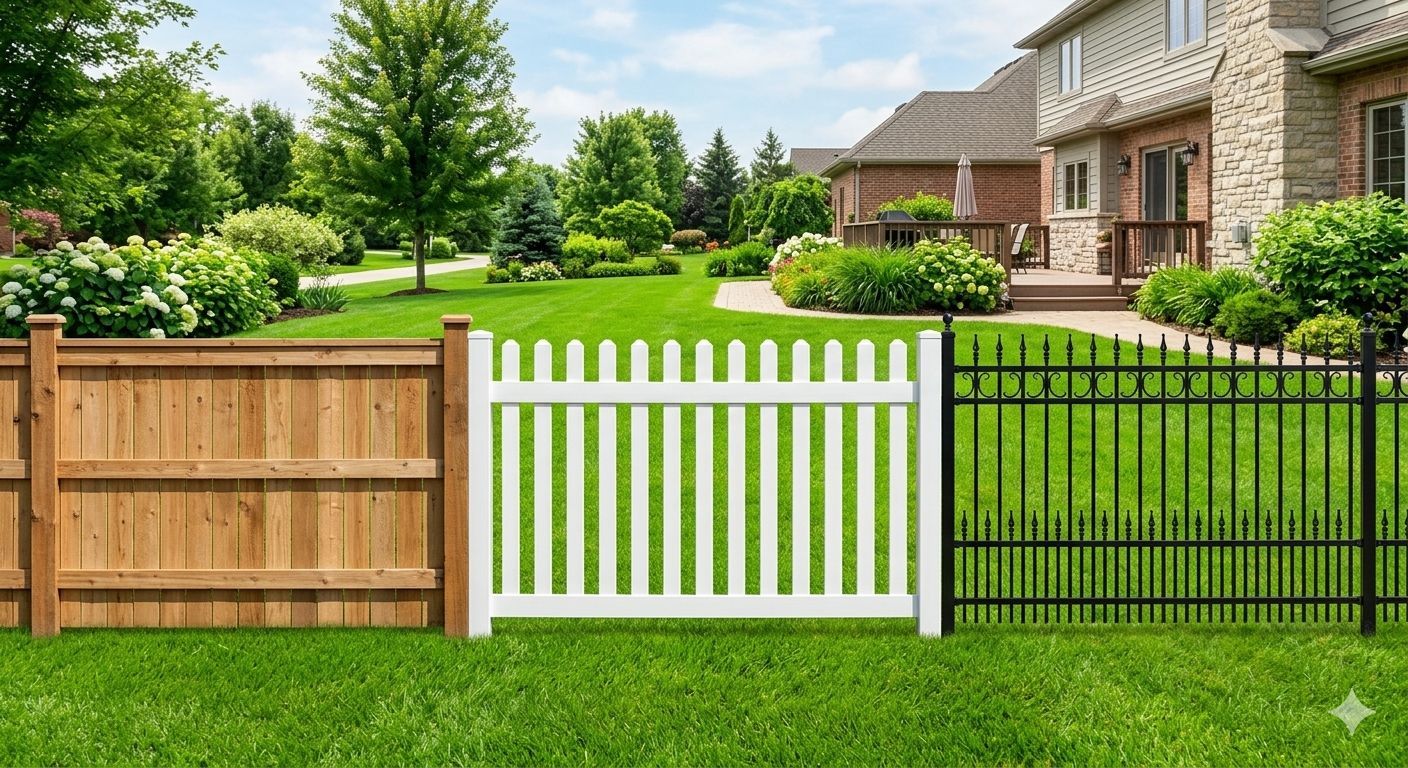
Another option is to use a privacy fence along one exposed side of the property and a more open style elsewhere. Strategic fencing can block direct views from nearby homes or roads without hiding trees, gardens, and natural features.
The transitions between fence styles should be planned carefully. Matching colors, post dimensions, or design details can help the finished project look coordinated.
Select a Material Based on the Full Project
Material cost becomes especially important when a project includes a long fence line. However, the initial price should be considered alongside maintenance, expected service life, and the look of the property.
Aluminum Fencing
Aluminum is often a strong choice when homeowners want an attractive boundary without obstructing the view. It requires relatively little maintenance and works well around pools, landscaped spaces, and gently sloping yards. It does not provide significant privacy, but its clean appearance can complement many home styles.
Vinyl Fencing
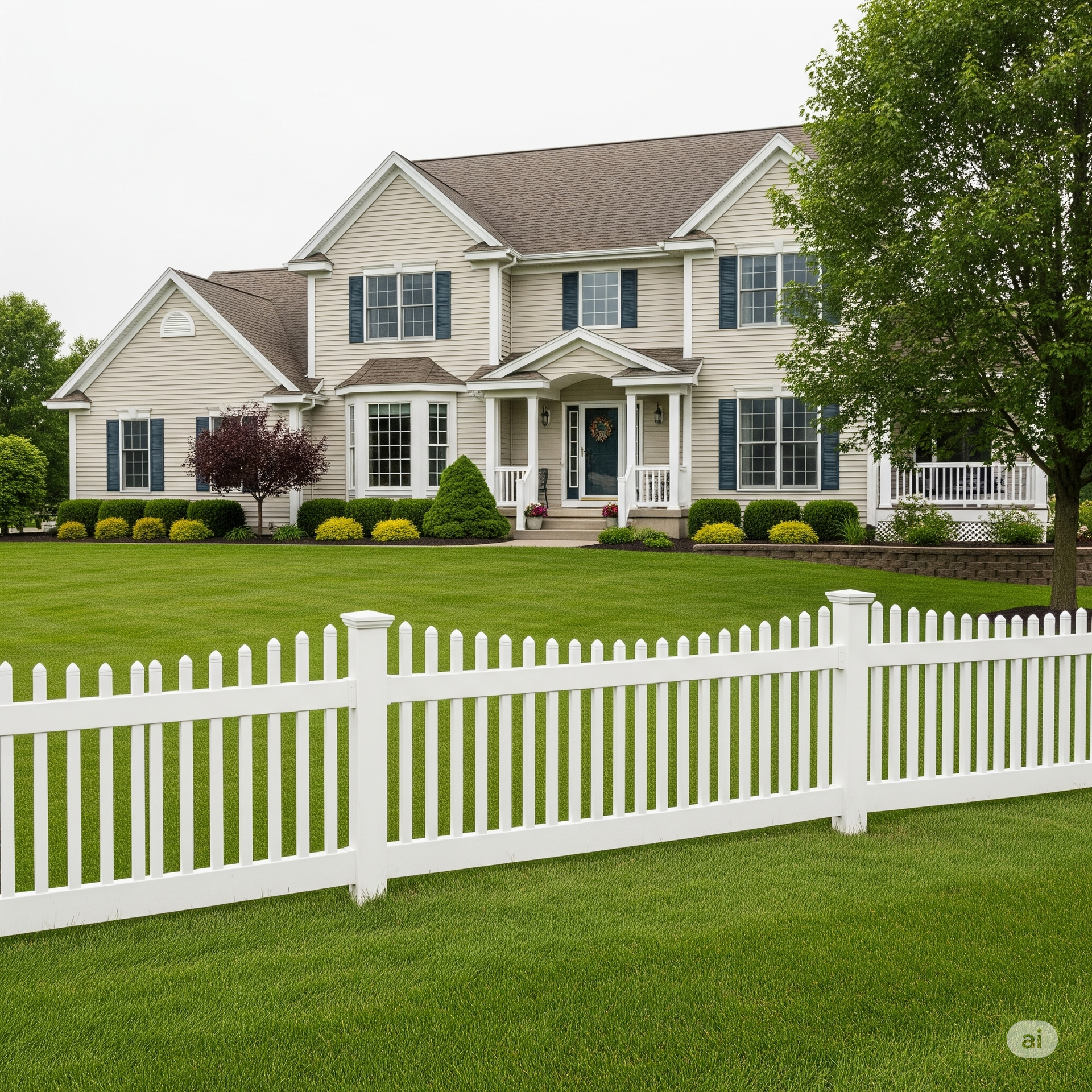
Vinyl provides dependable privacy and does not require staining or painting. It is well suited to areas near patios, pools, and neighboring properties. For a large project, homeowners should think carefully about where solid panels are truly needed so the yard does not feel unnecessarily enclosed.
Wood Fencing
Wood offers warmth, flexibility, and a natural look that fits well with wooded or landscaped properties. It can be customized with different heights, board arrangements, stains, and decorative details. Periodic sealing or staining is usually needed, and that maintenance commitment increases with the length of the fence.
Chain Link Fencing
Chain link is a practical way to enclose a larger area while controlling project cost. It is frequently used for pets, recreational areas, and less visible portions of a property. Black or green vinyl coated chain link can blend more naturally with landscaping than traditional galvanized fencing.
Plan Carefully for Pets
A large yard can be ideal for dogs, but the fence must match the animal. Height is important, but it is not the only concern. The spacing between pickets, gaps beneath the fence, gate latches, and the dog’s tendency to dig or climb should also be considered.
The layout should provide enough room for activity without including areas that are difficult to monitor or maintain. In some cases, a smaller secure enclosure connected to the house works better than fencing the entire lot.
Gate locations should also fit daily routines. A convenient gate near the driveway or garage makes it easier to move pets, lawn equipment, and supplies in and out of the enclosed area.
Work With Slopes and Changes in Grade
Larger properties often include uneven ground, drainage areas, or gradual slopes. These conditions affect how the bottom and top of the fence follow the landscape.
Some fence systems can rack or follow the slope closely. Others are installed in stepped sections. The best method depends on the material, the severity of the grade, and the desired appearance.
Special attention should be given to gaps beneath the fence. Large openings can create problems for small pets and may make the installation look unfinished. Reviewing the terrain before materials are ordered helps avoid surprises during construction.
Include the Right Gates and Access Points
A large fenced area may need more than one gate. In addition to regular walk gates, consider access for lawn tractors, trailers, landscaping crews, utility work, and future outdoor projects.
Wide or double gates should be placed on solid, properly installed posts because their additional weight can lead to sagging when they are not adequately supported. The ground must also provide enough clearance for the gates to swing without dragging.
It is worth thinking beyond current needs. A well placed access gate can make future maintenance and improvements much easier.
Prepare for Wisconsin Weather
Mequon fences must withstand snow, rain, wind, frozen ground, and repeated temperature changes. Proper post depth and installation are essential, particularly on long fence runs where small alignment problems can become more visible.
Drainage should be evaluated before installation. Areas that regularly collect water may need special consideration to protect the stability of posts and provide adequate clearance beneath the fence.
Material quality and hardware also matter. Hinges, latches, fasteners, and posts should be selected for outdoor exposure and regular seasonal changes.
Design the Fence Around the Property
The best fence for a large yard is not necessarily the tallest, most expensive, or most decorative option. It is the fence that provides the right level of privacy and security while fitting naturally into the landscape.
Mequon Fence helps homeowners plan and install fencing for larger yards, pets, pools, privacy, landscaping, and property definition. Each project should account for the size of the lot, the way the yard is used, and the practical details that affect long term performance.
Contact Mequon Fence to discuss your fence installation project in Mequon, WI, and request an estimate.